Showing posts with label Ambient. Show all posts

2011-07-01

Akira Rabelais - Elongated Pentagonal Pyramid

From Allmusic.com : "In this computer music release of a very reduced and refined aesthetic, Ahira Rabelais works with very small sounds to create tranquil click-laden soundscapes. As this label is known for producing some of the more extreme diversions in post-electronic music, this CD sits well on the roster alongside Christophe Charles and Achim Wollscheid. While at times almost inaudible, the micro-sound modulations and active use of the stereo field bring to mind the pin-dropping sound of Bernhard Gunter. While the sounds are laced with the gritty pixelated textures of computer bit-crushing, Elongated Pentagonal Pyramid can be a somewhat stale and scientific listen. But, in an admirable fashion, the composer is restrained and never quite lets the computer take over, maintaining a patient and controlled method that keeps this far from being indulgent. Fans of both ambient and academic computer music will find the CD fascinating, a controlled and minimal sound world that remains compelling throughout."

"Elongated Pentagonal Pyramid" was released by Ritornell in 1999.

Get it here : Akira Rabelais - Elongated Pentagonal Pyramid

Akira Rabelais - Eisoptrophobia

From Allmusic.com : "An intellectual pioneer as much as anything else, Akira Rabelais issued forth musical creations and inventions from his perch at CalArts. Born and raised in South Texas, one of his childhood pastimes involved shooting metal plates with bb guns so that he could experience the unique sound that it caused. That fascination with sound, combined with a philosophical and literary bent (his favorite surreal and magical realist snippets of literature are on his website, www.akirarabelais.com) helped lay the path for the musical creations he has been issuing since 1990 -- he describes himself as a "composer writing software, not an engineer making music." The software that Rabelais made reference to in that quote, or at least the most famous among his inventions was the Argeïphontes Lyre. With functions like Eviscerator Reanimator, Time Domain Mutation, Morphological Disintegration, Verwechslung Kaffeetass and The Lobster Quadrille, the Lyre was a program that allowed the user to make a number of alterations to a piece of pre-recorded sound. The program quickly became a favorite of electronic music composers such as Terre Thaemitz and Scanner, who used it to create disorientating sound shifts. Rabelais' own cd, Elongated Pentagonal Pyramid (Ritornell, 1999) showed the stamp of the Lyre, with its multiple layers of gently wavering sound . Eisotrophobia followed in spring 2001."

"Eisoptrophobia" was released by Ritornell in 2001.

Get it here : Akira Rabelais - Eisoptrophobia

2011-06-25

Genesis P-Orridge with The Hafler Trio - Alaura / Slave Priest [3" CD]

This CD accompanied the book "Psychic TV : A Coumprehensive Collection Of Lyrics 1981-90" by Vittore Baroni.

Both tracks were recorded in Amsterdam (September 1990) by Genesis P-Orridge with The Hafler Trio, specially for this project. The only sound source that was used is the voice of G.P-Orridge. The two tracks were written by G.P-Orridge.


"Alaura / Slave Priest" was released by Stampa Alternativa in 1990.

Get it here : Genesis P-Orridge with The Hafler Trio - Alaura / Slave Priest

2011-06-24

Jim O'Rourke - Remove The Need

From Allmusic.com : "American post-classical composer Jim O'Rourke has been a key component in the increasing overlap of the American and European experimental music avant-garde, working in everything from jazz and rock to ambient and electro-acoustic and building many a bridge in between. A Chicago native, his work has found equal luck with experimental jazz and noise fanatics, chill room denizens, and bedroom experimentalists, and has had the resultant effect of cross-pollinating many otherwise isolated compositional communities. Dealing most often with prepared guitar in improvisational group settings, O'Rourke has also released a fair bit of material as a soloist, although more often in the electro-acoustic/musique concrète vein. He's collaborated with such contemporary improv heroes as Derek Bailey, Henry Kaiser, Eddie Prevost and Keith Rowe (of English improv group AMM), KK Null, David Jackman (Organum), and early Krautrock experimentalists Faust. O'Rourke is also engaged in an ongoing exploration of experimental rock as a member of Gastr del Sol, who've released albums through the Teen Beat and Table of the Elements labels. Beginning with guitar at the age of 6, it wasn't until his collegiate career at DePaul University that O'Rourke's interest in the less obvious possibilities of the instrument led him through the early catalogs of the post-classical and electro-acoustic traditions. While at DePaul, O'Rourke completed much of the work that would constitute his first few releases. He also had the opportunity to meet up with noted improvisational guitarist Derek Bailey, whose invitation to O'Rourke to play at the British improv festival Company Week led to further collaborative projects with Bailey, Henry Kaiser, Eddie Prevost, and David Jackman. O'Rourke began working with Dan Burke's Illusion of Safety project in the early '90s, releasing three albums through Staalplaat and Tesco, before moving on to form experimental "rock" group Gastr Del Sol with David Grubbs. Although focusing more on collaboration after a string of solo releases in the early '90s, O'Rourke has shifted back to solo work of late, releasing Terminal Pharmacy through John Zorn's Tzadik label and completing commissioned pieces for the Kronos Quartet and the Rova Saxophone Quartet. In 1995, O'Rourke was invited by German experimental electronic label Mille Plateaux (Oval, Steel, Microstoria) to conduct an extended remix of their entire back catalog. He also produced and co-wrote a good portion of innovative German outfit Faust's Table of the Elements release, Rien. Subsequent releases include 1997's acclaimed Bad Timing and its equally brilliant follow-up, 1999's Eureka."

"Remove The Need" was released by Extreme in 1993.

Get it here : Jim O'Rourke - Remove The Need

2011-06-22

Throbbing Gristle - In The Shadow Of The Sun

Side A :
In The Shadow Of The Sun Pt. 1

Side B :
In The Shadow Of The Sun Pt. 2

"In The Shadow Of The Sun" was released by Illuminated Records in 1984.

Get it here : Throbbing Gristle - In The Shadow Of The Sun

Psychic TV - Splinter Test 2 [3 x CD Boxset]

 "Splinter Test 2" comprises the following three albums :
A - Mouth Ov Thee Knight
B - Sugarmorphoses
C - Cold Dark Matter

"Splinter Test 2" was released by Syard in 1993.

Get it here : Psychic TV - Splinter Test 2

Psychic TV - Splinter Test 1 [3 x CD Boxset]

From Allmusic.com : "After Genesis P-Orridge dissolved the seminal industrial rock outfit Throbbing Gristle, he and Gristle cohorts Peter Christopherson and Cosey Fanni Tutti, plus Geoff Rushton, formed Psychic TV in 1979 as a means of continuing their confrontational, shock-oriented approach to music and their multimedia live performances. Psychic TV draws much of its inspiration from the literary underground, including situationist philosophy, William Burroughs (a professed fan), the Marquis de Sade, and Philip K. Dick. The group also claims to be the mouthpiece for its own quasi-religious group, the Temple Ov Psychick Youth. P-Orridge has been branded a dangerous deviant in several publications, and police raided his home in 1992, seizing videos, books, and magazines following a television show concerning child abuse in which a Psychic TV performance art video was shown out of context.

As for the music itself, Psychic TV's earlier years continued in the experimental vein of Throbbing Gristle's work, encompassing melodic pop, barely listenable white noise, gentle ballads, industrial found-sound collages, spoken word pieces, and experiments with ethnic instruments and world music, all tied together by a dadaist sensibility. Force the Hand of Chance, the group's first album, was released in 1982; during the '80s, Psychic TV's prodigious output totaled over 20 albums. Much of this stemmed from a publicity stunt beginning in 1986 for which the group attempted to release one live album, each from a different nation, on the 23rd of each month for 23 months. Even though the group didn't quite achieve its goal, the 14 albums Psychic TV released in 18 months were enough to get the group into the Guinness Book of World Records. Christopherson and Rushton both left the group rather early on to form Coil, and Psychic TV has since become an open-ended collective with contributors such as Alex Fergusson, formerly of Alternative TV. Psychic TV scored a minor U.K. pop hit in 1986 with "Godstar," a tribute to Rolling Stones guitarist Brian Jones, and 1988 saw the group's first album release in America with Allegory and Self.

Beginning in 1988, P-Orridge became a pioneer on the British club and rave scene. Records from the Chicago house scene by Frankie Knuckles and Farley Jackmaster Funk made their way to London, and when P-Orridge noticed the word "acid" on one of them, he dubbed the British psychedelic variation "acid house" and began recording and experimenting with the style on Jack the Tab: Acid Tablets, Vol. 1 and Towards Thee Infinite Beat. P-Orridge has since released albums under the name Psychic TV as well as using a variety of aliases to produce "compilation" albums actually featuring all his own music. Several Psychic TV collections, as well as new material, appeared in the '90s; the best of the retrospectives are the two singles compilations Hex Sex and Godstar, and the 1999 overview Best Ov: Time's Up. New Psychic TV material took a backseat as P-Orridge's commitment to his spoken word project Thee Majesty and a new philosophy he dubbed "Pandrogeny" occupied his time. It was the latter that had him going under the knife for breast implants and enforcing the use of the pronoun s/he. PTV work began again in 2003 with two years of touring leading to studio work. A new album was delayed when Throbbing Gristle reunited for a short time, but work resumed in 2006. The finished product, Hell Is Invisible...Heaven Is Here, arrived a year later. P-Orridge's wife and bandmate, Lady Jaye Breyer P-Orridge, died of heart failure a few months after its release. A tribute to her, Mr. Alien Brain vs. the Skinwalkers, was released near the end of 2008, featuring versions of Syd Barrett's 'No Good Trying' and the Velvet Underground's 'Foggy Notion'."

"Splinter Test 1" comprises the following three albums :
A - Elipse Ov Flowers
B - Tarot Ov Abomination
C - Stained By Dead Horses

"Splinter Test 1" was released by Syard in 1993.

Get it here : Psychic TV - Splinter Test 1

2011-06-19

Antenna Farm / Main - AF_M

From Allmusic.com : "After briefly retiring the Main name to work on other projects, Robert Hampson returned in collaboration with the Antenna Farm duo on this release, the first in a projected new series by the Staalplaat label. Initial collaborative recordings in the Netherlands were combined with other efforts in the U.K., resulting in this five-track release. Those familiar with the ultimate extremes of Hampson's work will find his efforts here a fine balance between past musical paths and new departures. He seems to have embraced the possibilities of glitch production for his relentless rhythms in much the same way as fellow heavy psych extremist Brad Laner did for Electric Company. Antenna Farm's work, being already grounded in that field, slots in nicely with the new focus here, the resulting collaborations being a fine balance between the duo's computer abuse and Hampson's drone-derived feedback treatments and alien sheets of sound. Bursts of static tones sound almost like alien transmissions from somewhere far off in the galaxy; almost animalistic tones of slurping and gulping crop up here and there among bursts of buzzing that cyclically reappear in the mix. The five tracks -- untitled but described via frequency transcriptions in the liner notes -- collectively live up to their creators' overall reputation for ignoring the easily tuneful for challenging, involving results. More organic methods of noisemaking occur -- the second track starts off with what could be a bunch of clattering pieces of wood, perhaps not. The final track provides a suitably gripping conclusion to AF_M, revisiting styles used elsewhere on the disc and adding new elements, such as a relentless echoing chime increasingly swathed in static noise."

"AF_M" was released by Brombron/Staalplaat in 2001.

Get it here : Antenna Farm / Main - AF_M

Antenna Farm - Fog / Splinter Tracks

Antenna Farm is a London based duo formed by Davin Howell and The Experience.

"Fog / Splinter Tracks" was released by Phthalo in 2001.

Get it here : Antenna Farm - Fog / Splinter Tracks

2011-06-18

Yoshihiro Hanno - ES:

From www.yoshihirohanno.com : "A noble musician/composer who practices broad creation from electronic music to acoustic movie sound track in all over the world and writes music basing on his own stance and point of view. Hanno had appeared in electro scene with huge impact of his original sound that album, which had been released as Multiphonic Ensemble from Belgian "Sub Rosa" imprint in 1997 had. This album had highly acclaimed as "giant step of electronics music" and "most important electronics album in last few years." and his existence had drawn attention of the people suddenly.

In 1998, he collaborated with Ex-Japan member for the album that was released in Japan, U.K. and USA. Also in the same year, he was commissioned to perform Maurice Ravel's "Pavane For A Dead Princess" with full orchestra of NJP (New Japan Philharmonic orchestra). He restructured the famous masterpiece and received the enthusiastic praise.


Also he released his 1st album under Yoshihiro Hanno name. This album that has universal beauty received the many compliments from artist like Jim O'Rourke, Ryuichi Sakamoto etc... Also he had entered into the world of movie in the same year and dealt with score for the film "flowers of Shanghai" that is directed by Asian movie master Hou Hsiao-Hsien. It was his first experience for doing movie's sound track and had been highly acclaimed being invited to the Cannes Film Festival as official exhibited work for its competition class. Hanno who also went to the place by himself had evaluated as "discovering of new movie sound track composer" by the local press. And he had get international fame also as composer for film score doing ones including "Platform" which is directed by film director 'Jia Zhang-ke' (Venezia Film Festival 'the NETPAC Award', Nantes Film Festival-GrandPrix, Buenos Aires Film Festsival-GrandPrix), "Cannon" which is directed by film director Isao Yukisada, "All tomorrow's parties" which is directed by film director 'Yu Likwai' (exhibited work for Cannes Film Festival) and so on.


In 1999, in his Multiphonic Ensemble alias, he released his 2nd album . The music was inspired by the masterpiece of Georges Rouault ''circus'' is the concept of whole music and filed with the joy of freedom of creation, and has a lot of energy of music born.


In 2000, he was musical director along with for the Yomiuri TV soup opera . Also, became part of Ryuichi Sakamoto's unit "CODE" which collaborated with him which was named and released a special CD and Book Set. And he had also started his own label "Cirque" same year.The original computer music which is sent through here has been getting huge acclaim from all over the world.


Since 2001, Hanno had been developing more world-wide activities basing on both Paris and Tokyo. He has been enthusiastically doing a lot of live performances at each European countries like U.K, France, Germany, Switzerland and Belgium, including taking part in "Radical Fashion" with Bjork and so on. In 2002, he had released album <9 modules. +> from Japanese brand-new electronic music imprint "PROGRESSIVE FOrM" and highly acclaimed from both domestic and foreign media.


In 2003, Hanno had released his most brilliant work (the one which Arto Lindsey who is well known in NY Avant grade scene and Joan La Barbara who is famous for vocal performance in John Cage's works also participates in.) that contains the results of all his career spending 4 years to make and it should be expressed as masterpiece from Sony. Ultimate beauty and sound of that album had get overwhelming support and made existence of his marvelous musical talent sure. And the magnificent concert which had featured Lido Ensemble that is organized by 22 musicians including the wind instrument in Tokyo had completely succeeded. And Hanno is releasing latest type of minimal electro album, which collects dynamism of Hip hop, Dub and Jazz under name of from PROGRESSIVE FOrM in 2004.The album which features female singer and African-French rapper was also released from French imprint "Logistic records" in world wide."

"ES:" was released by Sub Rosa in 2002.

Get it here : Yoshihiro Hanno - ES:

2011-06-15

PGR - The Chemical Bride

From Allmusic.com "Cascone's first major release as PGR includes eight tracks of viscous audio concrete, ranging from the sinister drones of "Headful of Blue Sun" to the slightly less sinister gaseous ambience of "Oceanic & Atmospheric."

"The Chemical Bride" was released by Silent Records in 1992.

Get it here : PGR - The Chemical Bride

2011-06-13

Michael Mantra - Sonic Alter

From Discogs.com : "Michael Mantra creates Ambient music. More than that, he creates tools for "brain hemisphere synchronization" (after synchronizing the mind and the body, Mantra's work claims to release endorphins - part of the human body's natural pharmacy which work at the level of opiates). Mixing modulating high and low harmonic tones (low deep drones and high resonating harmonics) with didgeridoo, ocean waves, rain, water, birds and other natural sounds and instruments, Michael creates a perfect ambient soundscape for the ultimate relaxation trip.

Mantra attempts to create sound structures that "induce a meditative state that synchronizes brain wave frequencies" or, more simply put by Mantra himself, create "Brain Hemisphere Harmonic Healing". From the early cassette only releases "Sonic Transform" with John Now and "Sonic Satori" to the CD release on Silent "Sonic Alter" and the brilliant follow-up "Sonic Continuum" with Silent Records contributor Rod Modell, Mantra strives to keep the Ambient "ethic" of the early 90's "chill out" vibe alive."

"Sonic Alter" was released by Silent Records in 1994.

Get it here : Michael Mantra - Sonic Alter

2011-06-11

Terre Thaemlitz - Tranquilizer

From Allmusic.com : "Though Terre Thaemlitz would go on to create highly conceptual works exploring gender politics and post-structuralist theory, on Tranquilizer he was content to craft lush and appealing chill-out atmospheres. This album is an artifact of the post-rave ambient era typified by groups like the Orb, filled with evocative synth washes mixed with sounds of nature and bits of tribal percussion. It might sound a bit naïve to ears weaned on electronic music made with powerful computer software, but Tranquilizer is not without its charms, and it shows Thaemlitz' deft touch with mood and texture. "Raw Through a Straw" is a simple, understated piece for organ that was featured on a very early Thaemlitz single. "Meditation of the Mountain Oyster" leans toward new age with the gentle sound of surf and gentle hand percussion. "Hovering Glows" is the most interesting track here, with some sections presaging later trends in glitch music, and others verging on Massive Attack-style trip-hop. Thaemlitz' career path is marked by restless experimentation, but Tranquilizer is merely a cozy and pleasant place for a layover."

"Tranquilizer" was released by Instinct Records in 1994.

Get it here : Terre Thaemlitz - Tranquilizer

2011-06-10

Terre Thaemlitz - Soil

From Allmusic.com : "A flowing, shifting, almost timeless statement incorporating equal parts confusion and calm across six tracks of entirely beatless ambient. Thaemlitz' ability to infuse elements of immediacy and physicality into a measured, slowly evolving style traditionally bogged down by either disinterested elitism or faux collectivist spirituality figures him as one of America's most important contemporary composers, and a singular voice in new ambient."

"Soil" was released by Instinct Ambient in 1995.

Get it here : Terre Thaemlitz - Soil

Terre Thaemlitz - Love For Sale - Taking Stock In Our Pride

"Love For Sale - Taking Stock In Our Pride" was released by Mille Plateaux in 1999.

Get it here : Terre Thaemlitz - Love For Sale - Taking Stock In Our Pride
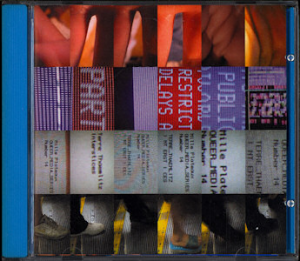
Terre Thaemlitz - Interstices

From Allmusic.com : "New York-based composer Terre Thaemlitz is one of only a handful of significant American artists working in the new ambient vein. He's released the bulk of his material through the Instinct Ambient label, but has also issued tracks (under his own name and as Chugga) on his own Comatonse label and through others. Although Thaemlitz's entre into electronic came in a somewhat traditional fashion -- as a house DJ -- his explorations in electronic abstraction have been anything but, focusing on themes of abjection, alienation, fracture, and contradiction in his music. Thaemlitz's recorded work, collected on albums such as Tranquilizer and Soil, is closer in tone to ambient-leaning industrialists such as B. Lustmord, Carl Stone, and (some) Merzbow, as well as "deep listening" composers such as Pauline Oliveros and Robert Rich. He's also recorded with Bill Laswell, releasing Web in 1995, and done remix work for Interpieces Organization and the Golden Palaminos, among others.

Born in Minnesota and raised in Missouri, Thaemlitz moved to New York in the mid-'80s to pursue art scholarship at Cooper Union. Soon distracted by the growing New York house scene, he began DJing at drag balls and benefits, leading to an Underground Grammy for best DJ in 1991. Although primarly a dancefloor DJ, Thaemlitz's insistence upon integrating house music's more simplistic monotony with challenging, complicated breaks and references earned him an uneasy relationship with club promoters looking for DJs whose only commitment was the 4/4 beat. Retiring from club DJing in the early '90s (although he continues to spin experimental electronic music at art galleries, one-offs, and in other marginal contexts), Thaemlitz began making his own tracks, beginning with house but quickly moving into genre defying fusions of funk, soul, disco, and musique concrete, and eventually settling into experimental ambient. One of his earliest works, "Raw from a Straw," in addition to limited release through his own Comatonse label, appeared on an early ambient compilation on Instinct, and earned him an almost instant reputation. He's since fortified that with a pair of full-length releases remarkably free of many of the cliched conventions of club-drived ambient. He continues to support new talent through Comatonse, and in 1999 returned with Replicas Rubato. Interstices, a thirty-one track release with no song titles, followed a year later."

"Interstices" was released by Mille Plateaux in 2000.

Get it here : Terre Thaemlitz - Interstices

Terre Thaemlitz - Couture Cosmetique

From Allmusic.com : "Terre Thaemlitz's reputation as one of the most consistently challenging and inventive American ambient composers gets a BIG shot in the arm with his fourth album-length release. Following close after Die Roboter Ruboto's ponderous salon interpretations of Kraftwerk, Couture Cosmetique hazards perhaps Thaemlitz' most unflinching exploration of marginal identities through music to date, combining a queer theoretical thematic (transgendered sexuality, non-essentialist conceptions of identity constitution, etc.) in close parallel with what are becoming compositional signatures (residual properties of electronic sound synthesis, the inversion of harmonic and melodic structural relationships, etc.). Closest probably to his previous Instinct outing, Soil, Couture Cosmetique retains that album's sense of enervated disjoint while upping the "challenging listen, Terre" ante considerably. More than worth the effort."

"Couture Cosmetique" was released by Caipirinha Productions in 1997.

Get it here : Terre Thaemlitz - Couture Cosmetique

Terre Thaemlitz - Lovebomb

From Allmusic.com : "After a few similar efforts for Mille Plateaux, the always-challenging Terre Thaemlitz returns with another intellectually charged electro-acoustic album, Lovebomb, that says a lot without saying much. Thaemlitz's preceding recordings for Mille Plateaux, particularly Interstices (2000) and Love for Sale: Taking Stock in Our Pride (1999), brought together abstract ideologies with ambient-glitch soundscapes, and so does Lovebomb, though much more coherently. The central idea here is fairly clear if you peruse the album's absolutely astonishing packaging (totally conceived by Thaemlitz) and take some time to think about what's presented: The underlying message here seems to be that love, perhaps the most celebrated emotion of all, is represented differently from culture to culture, and as paradoxical as it may seem, love is sometimes associated with destruction, which is metaphorically represented here by the notion of a bomb (as in, say, Islamic suicide/homicide bombings circa 2002). Thaemlitz conveys this message partly by delivering an album of dual languages, English and Japanese. Everything here, from the artwork to the liner notes to the recording itself, is represented in both languages. Chances are you'll not be able to comprehend both. If you do, you're in for a wealth of comparison, as that seems to be Thaemlitz's aim here: He wants you to see that love isn't as universal as most people sometimes think it is, as what seems literal in one culture translates differently in another. The notion of metaphor becomes central, at least from one likely vantage point, since the evidenced notions of love here -- the artwork, liner notes, field recordings, and so on -- are simply representations of a universal emotion that is communicated from culture to culture in a far from universal matter. As with most of Thaemlitz's albums for Mille Plateax, the ideas tend to outweigh the music, and here the packaging really steals the show, as it's outright marvelous, to the point where you even forget the music is playing. Furthermore, the timing of this album's release in early 2003, in the wake of the 9/11 disaster and on the eve of the Iraq crisis, seems particularly timely. Thaemlitz has released a lot of albums in his prolific and long-winded career -- some throwaways, some brilliant -- and Lovebomb is up there with the best of them, even if the music isn't too special."

"Lovebomb" was released by Mille PLateaux in 2003.

Get it here : Terre Thaemlitz - Lovebomb

2011-06-09

Tetsu Inoue & Carl Stone - Pict.Soul

From Allmusic.com : "A first collaboration between Tetsu Inoue and Carl Stone, pict.soul has been released by the record label of Cycling '74, the computer company that produced the Max/MSP software. One could fear the album would turn into something like a demonstration tool, but it is not the case. The music remains computer-based electronica, but in general inspiration prevails over system requirements -- it sticks close to both artists' previous releases. Of course, each of them tugs on the bedsheets and the balance between Inoue's delicate, experimental ambient music and Stone's more jagged-edge constructions shifts from one track to the next. "%.disc" is pure Inoue: soft, insidious, and mesmerizing. "(.ram)" and "@.fine" are most probably Stone creations: busy, they build interruptions and glitches into something you could dance to if you had a third leg in the middle of your back. Everything in between finds the two compromising to find common ground -- and explore something new, as "?.digit" testifies. A sample (circus organ?) is literally orchestrated to form a mechanical fanfare. Interesting in concept, it is not completely convincing. Otherwise pict.soul is a fine CD recommendable to fans of Kim Cascone, Kit Clayton, and the like."

"Pict.Soul" was released by Cycling 74 in 2001.

Get it here : Tetsu Inoue & Carl Stone - Pict.Soul

Carl Stone - Exusiai

From Allmusic.com : "Exusiai is a dance suite written by Carl Stone, well known for his early work in samplers, best heard on his masterwork, Mom's. As is typical in Stone's work, the samples he uses as basic material are manipulated until they are all but unrecognizable, ground up, hyper-extended, or sliced into slivers. This results in a wide variety of electronic washes and burblings with the occasional familiar sound, a trumpet here, a bell tone there. Possibly because of its ultimate use as accompaniment for a dancer, however, there is little focus and development of ideas here and more simply "sound painting" as though, given the time guidelines necessary for the performance, Stone was merely filling the space with various attractive textures. Several sound as though they might have been derived from similar sources to much of "Gadberry's" from the Mom's disc; others recall Terry Riley's undulating keyboard studies. While some of these matrices, like the aptly titled "Liquid Body," are inherently fascinating and even luxurious, there seems to be a lack of driving motivation that characterized his earlier work. Possibly, it was simply a matter of the technology having caught up with him; ten years prior, Stone was a master of the field, but by 1998, others had taken the ball and ran much further. Still, an enjoyable enough effort and one that fans of Stone will be glad to own."

"Exusiai" was released by New Tone Records in 1999.

Get it here : Carl Stone - Exusiai