From Allmusic.com : "There is no need to argue: Merzbow stands as the most important artist in noise music. The favorite moniker of Japanese Masami Akita appears on hundreds of albums. The name comes from German artist Kurt Schwitters' famous work Merzbau, which he also called The Cathedral of Erotic Misery. Akita's choice reflects his fondness for junk art (through Schwitters' collage method) and his fascination with ritualized eroticism, namely in the form of fetishism and bondage. All these elements constitute the Merzbow persona.
Akita was born in Tokyo in 1956. He grew up with psychedelic rock and began to play the guitar in progressive rock cover bands, in particular with drummer Kiyoshi Mizutani, who would remain a frequent collaborator. After high school, Akita studied literature and visual arts in college. There he discovered free jazz and studied seriously the ideas of Dada and the surrealists (Salvador Dali remained a big influence). Akita gradually withdrew himself from the rock scene and began experimenting in his basement with broken tape recorders and feedback.
In 1979, Akita created his own cassette label, Lowest Arts & Music, and released the first of many albums, Metal Acoustic Music. Infiltrating the then-burgeoning network of underground industrial music, Merzbow lined up one cassette after another, packaged in Xeroxed collage art. His harsh noise eschewed the primitive anger found on this scene (Throbbing Gristle, Man Is the Bastard) to reach a Zen state, calm inside the storm. Mizutani occasionally appeared on some of the raw material, as would other musicians (like Reiko.A), but in essence Merzbow is Akita and would always be. The artist/group made low-budget live appearances in Tokyo, but his main focus remained on his art production and his writing (he is erudite in 20th century art and the Japanese tradition of bondage).
In 1983, Akita's first LP, Material Action 2 (NAM), was released on Chaos/Eastern Works in Japan. Out of the mail-art network and into the specialty record shops, Merzbow began to attract some eyes and ears. Akita started a second label, ZSF Produkt, which put out dozens of 7"s, EPs, LPs, and more cassettes. By the late '80s, other record labels had begun to pay interest, namely the Australian Extreme. Collaborative (1988), an LP recorded with Achim Wollscheid, brought the Merzbow sound to more international listeners, and slowly Akita invaded other territories. By the mid-'90s, his reputation verged on the mythical. He toured Europe and the U.S., and had high(er)-profile releases on Extreme, RRR, and Alchemy.
In 1997, Extreme announced it was putting in production a 50-CD box set, Merzbox. It was finally released three years later. It includes 30 reissues dating as far back as 1979, and 20 discs' worth of unreleased material, and remains the biggest musical statement in the history of noise music. More widely available albums for Alien8 Recordings (Aqua Necromancer, 1998) and Tzadik (1930, 1998), combined with constant worldwide touring, have taken the artist out of mythical status and propelled him into the legendary. In the late '90s, Akita started to collaborate with other artists outside the Merzbow moniker, namely with Mike Patton (as Maldoror) and Otomo Yoshihide. Both a prolific composer and performer, Akita continued his string of Merzbow releases into the next century, including Frog (2001), V (2003), Merzbird (2004), the two-volume set Minazo (2006), Merzbear and Synth Destruction (2007), Dolphin Sonar (2008), and the multi-volume 13 Japanese Birds series issued monthly between January 2009 and January 2010. He followed this massive undertaking with Another Merzbow Records, released by the U.K's Dirtier Promotions imprint in April of 2010."
"Cloud Cock OO Grand" was released by ZSF Produkt in 1990.
From Discogs.com : "Michel Chion was born in 1947 in Creil (France). After literary and musical studies, he began in 1970 to work for the ORTF (French Radio and Television Organization) Service de la recherche, where he was assistant to Pierre Schaeffer at the Paris’ Conservatoire national de musique, producer of broadcasts for the GRAM, and publications director for the Ina-GRM, of which he was a member from 1971 to 1976. It was there that he met Robert Cahen, composer and video artist, and with whom he entered into a long-lasting friendship and collaboration.
Parallel to these activities, he composed musique concrète works in the studios of the GRAM including Requiem (Grand prix du disque 1978) and several concrète melodramas, a dramatic form which he inaugurated in 1972 with Le prisonnier du son (The Prisoner of Sound) and continued with Tu, 1977-85, La tentation de saint Antoine, 1984, and Nuit noire, 1985. Also worthy of mention are La Roue, cycle du quotidien, 1972-85, 24 préludes à la vie (24 Preludes to Life), Variations, and Sonate, 1989-91, Crayonnés ferroviaires, 1992, Credo mambo, 1992 — realized at Musiques & Recherches (Ohain, Belgium) —, Gloria, 1994… all works for which he developed original compositional techniques.
He also works as a theoretician in a new area: the systematic study of audio-visual relationships, which he teaches at several centres (notably at Université de Paris III where he is an Associate Professor), and film schools (ESEC, Paris; DAVI, Lausanne) which has developed in a series of five books. Besides the twenty written publications translated into a dozen languages, he has also written on Pierre Henry, François Bayle, Charlie Chaplin, Jacques Tati, David Lynch, diverse subjects on music and film; he has published in French and international journals, and has contributed to numerous dictionaries and encyclopedias. He has also commenced work in film direction and production with the short film Éponine (Prix Jean-Vigo, prizes in Clermont-Ferrand, and in Montréal). Most recently in 1995, he has begun an audio-visual piece entitled Messe de terre at the CICV Pierre Schaeffer in Montbéliard (France).
After having dedicated his Guide des objets sonores to the ideas of Schaeffer, he continued with Le promeneur écoutant, essais d’acoulogie, (Plume, éditeur, 1993), and finally with Musique, médias, technologies (Flammarion), a theory of sound based on language. In 1991 he published, with the support of Jérôme Noetinger, L’art des sons fixés in which he proposes, in order to properly designate this music, the return to the term ‘musique concrète’ in its initial non-causal sense. His redefinition insists upon the effects particular to the fixation of sound, a term which he proposes in place of recording."
Side A :
1. La Ronde
Side B :
1. La Machine A Passer Le Temps
2. On N'arrête Pas Le Regret
3. Tu (Mouvement 9)
From Allmusic.com : "Chion began splicing together tape making musique concrete in France in the '70s. The title track to this collection of pieces is a 37 minute 16 second dark, mysterious, and at times demented version of the classic "Funeral Mass." "Funeral Mass" is the basis for all classical requiems. While such classic requiems glorify the suggestion of eternal life suggested by the religious interpretation of death, Chion's work probes the existential panic of those living under the threat of death. A dark, kaleidoscope collage of cruel whispers, snippets of choral works, and eerie, segmented sacred string music promote a feeling of uneasiness and abandonment."
Side A :
1. Requiem Aeternam
2. Kyrie Eleison
3. Épître
4. Dies Irae
5. Domine Deus
6. Évangile
Side B :
1. Sanctus
2. Pater Noster - Agnus Dei
3. Lux Aeterna
4. Libera Me
Tracklisting :
1. Zbigniew Karkowski - Wrench
2. Phauss - Nothing But The Truth / We'll Be Married In The Morning
3. John Duncan / Zbigniew Karkowski - Chapel Perilous
4. John Duncan - Kick
5. Guds Söner - Betaeckning
6. The Hafler Trio - Bread & Shit
"Anckarström Live" was released by Staalplaat in 1993.
From Allmusic.com : "New York-based composer Terre Thaemlitz is one of only a handful of significant American artists working in the new ambient vein. He's released the bulk of his material through the Instinct Ambient label, but has also issued tracks (under his own name and as Chugga) on his own Comatonse label and through others. Although Thaemlitz's entre into electronic came in a somewhat traditional fashion -- as a house DJ -- his explorations in electronic abstraction have been anything but, focusing on themes of abjection, alienation, fracture, and contradiction in his music. Thaemlitz's recorded work, collected on albums such as Tranquilizer and Soil, is closer in tone to ambient-leaning industrialists such as B. Lustmord, Carl Stone, and (some) Merzbow, as well as "deep listening" composers such as Pauline Oliveros and Robert Rich. He's also recorded with Bill Laswell, releasing Web in 1995, and done remix work for Interpieces Organization and the Golden Palaminos, among others.
Born in Minnesota and raised in Missouri, Thaemlitz moved to New York in the mid-'80s to pursue art scholarship at Cooper Union. Soon distracted by the growing New York house scene, he began DJing at drag balls and benefits, leading to an Underground Grammy for best DJ in 1991. Although primarly a dancefloor DJ, Thaemlitz's insistence upon integrating house music's more simplistic monotony with challenging, complicated breaks and references earned him an uneasy relationship with club promoters looking for DJs whose only commitment was the 4/4 beat. Retiring from club DJing in the early '90s (although he continues to spin experimental electronic music at art galleries, one-offs, and in other marginal contexts), Thaemlitz began making his own tracks, beginning with house but quickly moving into genre defying fusions of funk, soul, disco, and musique concrete, and eventually settling into experimental ambient. One of his earliest works, "Raw from a Straw," in addition to limited release through his own Comatonse label, appeared on an early ambient compilation on Instinct, and earned him an almost instant reputation. He's since fortified that with a pair of full-length releases remarkably free of many of the cliched conventions of club-drived ambient. He continues to support new talent through Comatonse, and in 1999 returned with Replicas Rubato. Interstices, a thirty-one track release with no song titles, followed a year later."
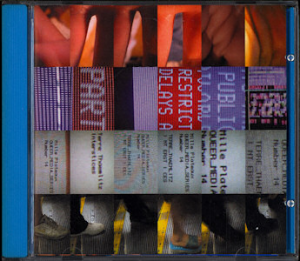
"Interstices" was released by Mille Plateaux in 2000.
From Allmusic.com : "Terre Thaemlitz's reputation as one of the most consistently challenging and inventive American ambient composers gets a BIG shot in the arm with his fourth album-length release. Following close after Die Roboter Ruboto's ponderous salon interpretations of Kraftwerk, Couture Cosmetique hazards perhaps Thaemlitz' most unflinching exploration of marginal identities through music to date, combining a queer theoretical thematic (transgendered sexuality, non-essentialist conceptions of identity constitution, etc.) in close parallel with what are becoming compositional signatures (residual properties of electronic sound synthesis, the inversion of harmonic and melodic structural relationships, etc.). Closest probably to his previous Instinct outing, Soil, Couture Cosmetique retains that album's sense of enervated disjoint while upping the "challenging listen, Terre" ante considerably. More than worth the effort."
"Couture Cosmetique" was released by Caipirinha Productions in 1997.
From Allmusic.com : "After a few similar efforts for Mille Plateaux, the always-challenging Terre Thaemlitz returns with another intellectually charged electro-acoustic album, Lovebomb, that says a lot without saying much. Thaemlitz's preceding recordings for Mille Plateaux, particularly Interstices (2000) and Love for Sale: Taking Stock in Our Pride (1999), brought together abstract ideologies with ambient-glitch soundscapes, and so does Lovebomb, though much more coherently. The central idea here is fairly clear if you peruse the album's absolutely astonishing packaging (totally conceived by Thaemlitz) and take some time to think about what's presented: The underlying message here seems to be that love, perhaps the most celebrated emotion of all, is represented differently from culture to culture, and as paradoxical as it may seem, love is sometimes associated with destruction, which is metaphorically represented here by the notion of a bomb (as in, say, Islamic suicide/homicide bombings circa 2002). Thaemlitz conveys this message partly by delivering an album of dual languages, English and Japanese. Everything here, from the artwork to the liner notes to the recording itself, is represented in both languages. Chances are you'll not be able to comprehend both. If you do, you're in for a wealth of comparison, as that seems to be Thaemlitz's aim here: He wants you to see that love isn't as universal as most people sometimes think it is, as what seems literal in one culture translates differently in another. The notion of metaphor becomes central, at least from one likely vantage point, since the evidenced notions of love here -- the artwork, liner notes, field recordings, and so on -- are simply representations of a universal emotion that is communicated from culture to culture in a far from universal matter. As with most of Thaemlitz's albums for Mille Plateax, the ideas tend to outweigh the music, and here the packaging really steals the show, as it's outright marvelous, to the point where you even forget the music is playing. Furthermore, the timing of this album's release in early 2003, in the wake of the 9/11 disaster and on the eve of the Iraq crisis, seems particularly timely. Thaemlitz has released a lot of albums in his prolific and long-winded career -- some throwaways, some brilliant -- and Lovebomb is up there with the best of them, even if the music isn't too special."
"Lovebomb" was released by Mille PLateaux in 2003.
From Discogs.com : "Since the late 1990s, Ultra-red have featured the following four artist-activists: Elizabeth Blaney (artist, organizer, Union De Vecinos), Pablo Garcia (musician, organizer, Woodcraft Rangers), Dont Rhine (artist, AIDS activist), and Leonardo Vilchis (artist, organizer, Union De Vecinos).
More recently, the band has expanded further with new members Manuela Bojadzijev, Janna Graham, Taisha Paggett, Elliot Perkins (formerly Phonem), and Robert Sember."
"Structural Adjustments" was released by Mille Plateaux in 2000.
From Discogs.com : "Founded in 1994 by two AIDS activists, Dont Rhine and Marco Larsen, Ultra-red have expanded over the years to include activists and organizers from a variety of social movements both in Los Angeles and abroad. In 2004, on their tenth anniversary, the four members of the new group launched a restructuring of Ultra-red into an aesthetic-political organization. The newly reorganized Ultra-red permits a greater diversity of projects and campaigns on a local and international level, with multiple groups and alliances taking up the Ultra-red moniker."
"La Economia Nueva (Operation Gatekeeper)" was released by FatCat Records in 2002.
From Discogs.com : "Working within a variety of urban ambiences, Ultra-red have investigated the spaces of needle exchange (Soundtrax, 1992 - 1996), public sex (Second Nature, 1995 - 1998), public housing (Structural Adjustments, 1997 - Present), resistance to global capital (Value System, 1998 - Present), labor (Social Factory, 1997 - 2002) and education (School of Echoes, 2001 - Present). Throughout each of these efforts, Ultra-red have pursued two aesthetic-political objectives: to explore acoustic space as enunciative of social relations and, secondly, to radicalize the conventions of electro-acoustic art."
"Desarrollos Sostenibles - Sustainable Developments" was released by Beta Bodega in 2002.
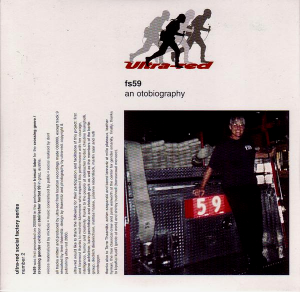
Ultra-Red is an audio activist group producing radio broadcasts, street actions, performances, recordings, installations and public actions, occupying the borders between art and political organizing. FS59: An Otobiography was first presented in 1999 in the performance "Tranual Labor" for the "Crossing Genre/Crossing Gender" exhibition in Austria. It features political performance art about transgendered people, specifically about transsexual worker demands for transitioning on the job.
"An Otobiography" was released by Transparency in 2000.
From www.sensorband.com : "Sensorband is the premier trio of virtual instruments. Each musician uses interactive electronics in a different way - making music from ultrasound, infrared, and bioelectric signals. They have created a band that takes a rock power trio as metaphor. Edwin van der Heide is the "vocals", working with ultrasound based 3D handheld controllers to perform infinite time stretching on digitally sampled vocal sources. Atau Tanaka is "guitar-bass" using muscle signals (EMG) and gesture to play air guitar, and low bass parts. Zbigniew Karkowski is "drums", playing virtual percussion in a cage armed with infrared beams. As a trio they reconcile new technology with the immediacy and energy of a rock group. With these new instruments the Sensorband musicians takes the group dynamic beyond the limitations of guitar, bass, and drums. The result is a powerful musical force of intense percussive rhythms, deep pulsing drones, and wailing melodic fragments.
Sensorband has also created a monumental 121 sq meter musical instrument called Soundnet.
The members of the Sensorband came together performing in the experimental music scene in Europe. Edwin and Zbigniew went together to the summer courses in Darmstadt. Atau met Zbigniew in San Francisco during a USA tour. They performed as soloists in the festival Sonimage at Tacheles in Berlin in 1993. A few months later, they premiered the Sensorband at Voyages Virtuels in Paris, then in 1994 at The Paradiso in Amsterdam. While geographical distance has prevented these musicians from performing together more often, this has been partially overcome by network technology. In 1995 the Sensorband appeared at the Sonar Festival in Barcelona, with Atau in Barcelona, and with Edwin and Zbigniew performing from Amsterdam via ISDN providing video and audio connections."
From Allmusic.com : "Cache 2002 documents the results of the third annual competition "Jeu de Temps/Time's Play" held by the Canadian Electroacoustic Community and opened to young and emerging sound artists. The 11 top-scoring pieces have been included on this CD."
Tracklisting :
01. R. Dominique Bassal - Rites D'Oiseaux Pensants
02. Carey Dodge - Sound For "Emporter Du Naufrage"
03. Brian Garbet - Ritual
04. Terence Huang - Birth Of Eternity
05. Adis Husejnagic - Sand
06. Martin Messier - Tiaré
07. Dan Nyborg, Andrew Watson - 198.3 Ashcroft Subdivision
08. David Paquette - Un Million D'Instants : I. Le Matin
09. Jean-Michel Robert - Les Enfants D'Éole
10. Andrew Wedman - Breath
11. Brett Ziegler - Graveyard Shift
"Cache 2002" was released by Productions électro Productions in 2002.
From Allmusic.com : "By 2001, the Quebec city sound art collective Avatar was undergoing important transformations, with two of their founding members -- Jocelyn Robert and Christof Migone -- turning or already turned toward new cities, new people, and new ventures. The intent of this remix project was to recycle the past in order to point to the future. Eight artists were commissioned remixes using the first CDs released on Ohm Éditions (Avatar's label). The music of Robert, Migone, Pierre-André Arcand, the collective projects Radio Folie Culture and Rappel, and precursors Bruit TTV was treated, sampled, and recreated by Ralf Wehowsky, Martin Tétreault, Christian Calon, Terre Thaemlitz, John Oswald, Diane Labrosse, David Kristian, and Alexandre St-Onge. So there are musicians from the Ambiances Magnétiques and Alien8 Recordings stables; from Montreal, Europe, and Japan; and from electro-acoustic and electronica realms, all on the same CD. They approached the subject from different angles, but came to similar conclusions. All pieces belong to the turn-of-the-century avant-garde stylings of digital lowercase or new electro-acoustics."
Tracklisting :
1. Ralf Wehowsky - Gesichte
2. Martin Tétreault - Bloc De Vitesse Brune Avec 2 Trous
3. Christian Calon - Aiguiser L'Ouïe
4. Terre Thaemlitz - Transit(ional Edit)
5. John Oswald - Ohmigone
6. John Oswald - Ridge
7. Diane Labrosse - Curieux Mélange Pour Amateurs Auditifs De La Jeune Radio
8. David Kristian - Ohmite
9. Alexandre St-Onge - I-I
"Ohmix" was released by Avatar / OHM Editions in 2001.
From Discogs.com : "Brume is Christian Renou, a prolific French musique concrète composer and sound organizer who has been releasing CDs and cassettes worldwide. Renou is remarkable because he engages in elaborate concrete compositions without the academic pretension that surrounds much of the work in this style."
In some way, Brume's musical style could be defined as Electro-Acoustic Rock'N'Roll.
From the liner notes : "This piece consists of recordings made during a concert tour in the United States of America in 1990 and sounds brought over from Sweden for this series of performances. This is the soul of America, the state of the states, the regeneration of a Serbo-Croatian mastermind and the penetration of a Swedish "Karolin" army destined to bring back order in the colonies. Order is Divine."
Phauss is Carl Michael Von Hausswolff and Erik Pauser.
"Nya Sverige - Nothing But The Truth" was released by Anckarström in 1991.
From the liner notes : "A short history of acceleration and deceleration, of distortion and purification and of autocratic ethnic and religious harmony or Effigiatus Homo Deus Signatur in Auro."
"GodTPhauss" stems mainly from two live installations that were re-recorded, mutated, layered, polished and settled at EMS in Stockholm from August 1992 to April 1993, and baptised at EMS on April 12th 1993.
Phauss is Carl Michael Von Hausswolff and Erik Pauser.
"GodTPhauss" was released by Silent Records in 1994.
This compilation brings together the works of Ulf Bilting, Zbigniew Karkowski and Phauss (aka Carl Michael Von Hausswolff and Erik Pauser).
The three collaborative pieces between Ulf Bilting and Zbigniew Karkowski were created and recorded in the Computer Music Studio at the Chalmers University of Technology in Gothenburg, from June to September 1990.
"Final Folklore" by Phauss was recorded, re-recorded, equalized, mutated and mixed in the Electro-Acoustic Music Studio at the State College of Music in Gothenburg during the summer 1990, by Phauss and Zbigniew Karkowski.
"Immortal By My Side" by Zbigniew Karkowski uses sound material generated with UPIC (Unité Polyagogique Informatique du CEMAMu) in Paris from June to July 1989. This sound material was then treated and manipulated at Steim in Amsterdam in May 1990, and later finally mixed in the Electro-Acoustic Music Studio at the State College of Music in Gothenburg in August 1990.
"Phauss - Karkowski - Bilting" was released by Silent Records in 1992.